
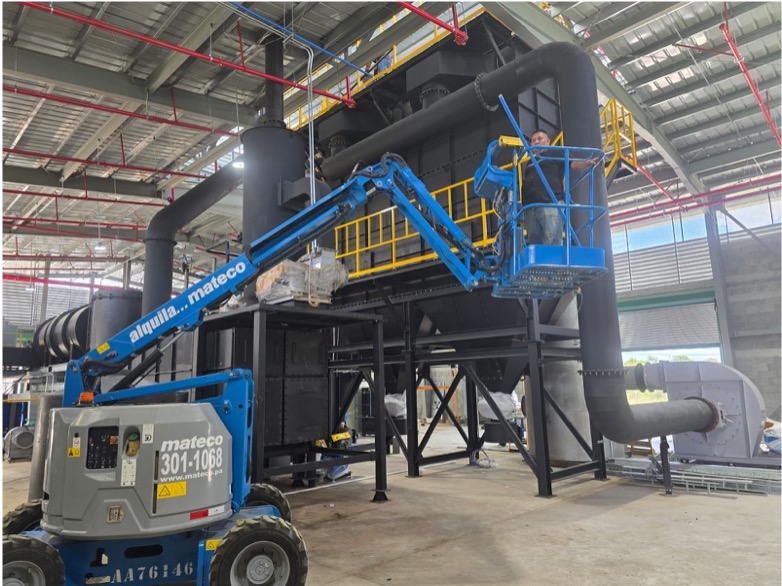
Project Overview
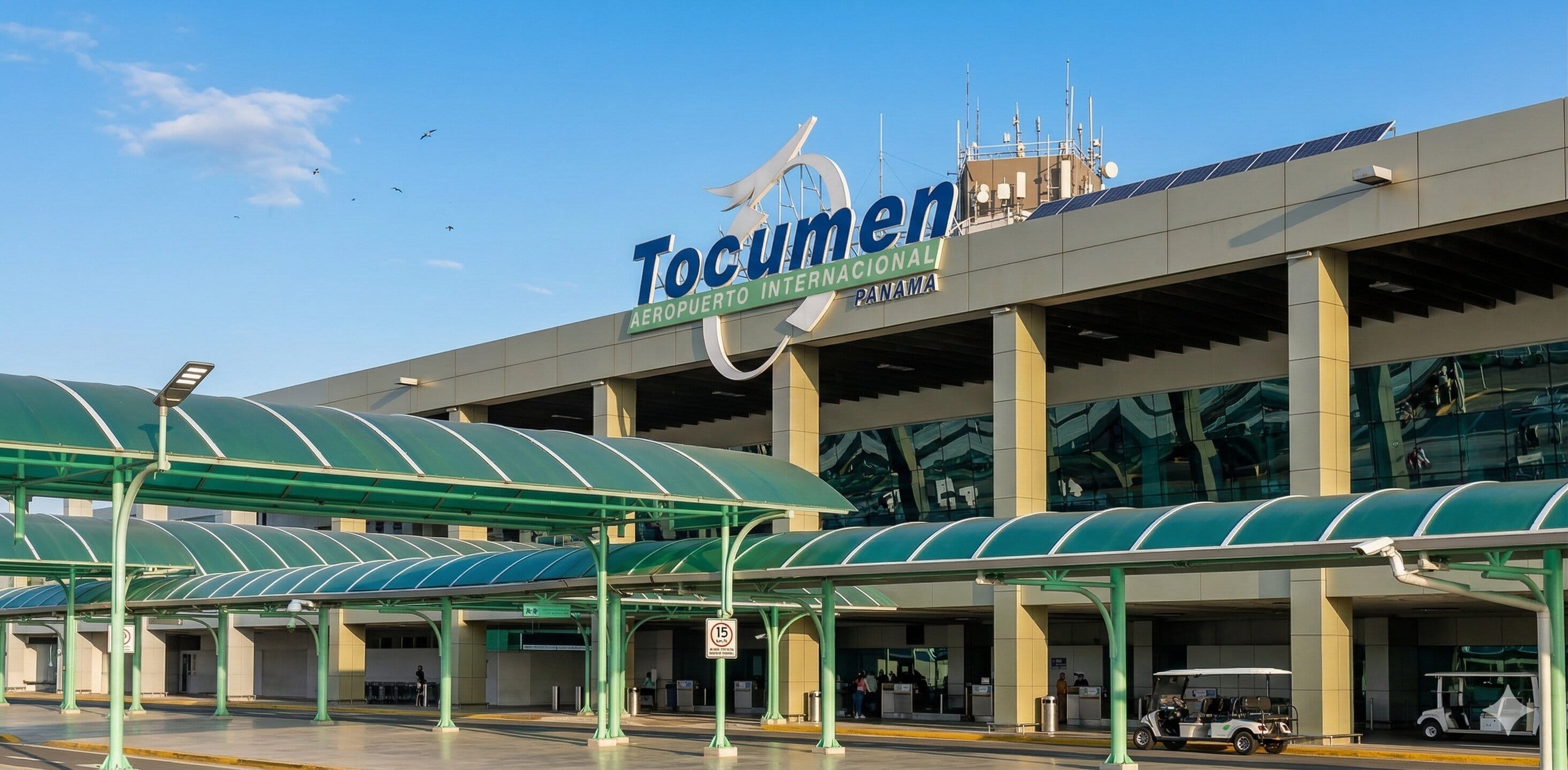
Tocumen International Airport (PTY) in Panama is one of the most critical aviation hubs in Latin America and the Caribbean, connecting 91 destinations across 37 countries. As the airport moves toward handling over 20 million passengers annually, managing the high volume of international solid waste (organic, inorganic, and liquid) is essential for maintaining global biosecurity and environmental standards. The project, executed by the Consorcio Bioecológica Ingenieros using advanced South Korean technology from CECOBLUE CO., Ltd, involved the construction and installation of a state-of-the-art Thermal Waste Treatment Plant.
The Challenge
- Insufficient Capacity: The airport's existing plant could only handle 4 tons per day, which was inadequate for the 7.5 to 8.5 tons of waste generated daily by increasing flight operations.
- Strict Biosecurity Risks: International flight waste is considered high-risk, requiring immediate and effective destruction to prevent the spread of diseases and pests that could threaten public health and animal safety.
- Environmental Compliance: The facility needed to meet stringent international and national environmental regulations, ensuring that waste treatment would not result in harmful emissions or odors.
Our Solution
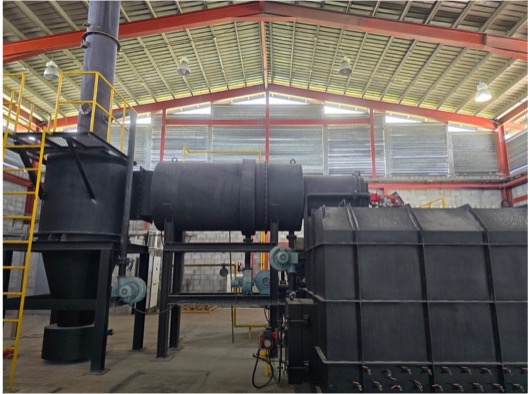
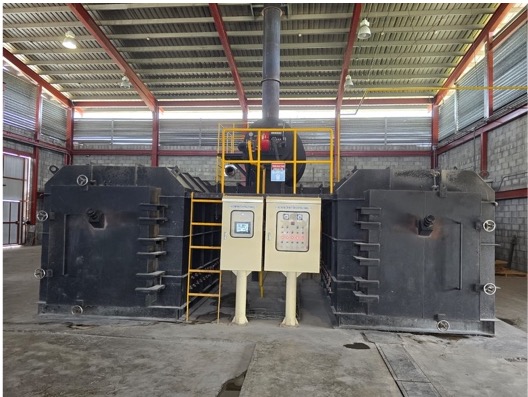
The project deployed a specialized thermal treatment system featuring South Korean pyrolysis and clean combustion technology.
- Capacity: The facility includes a high-capacity 1,000 kg/hour incineration unit (alongside a secondary 250 kg/hour unit) capable of processing up to 480 tons of waste per month.
- Automation: Operations are fully automated and monitored in real-time using the Siemens Simatic PCS system, which allows for efficient remote control and safe handling.
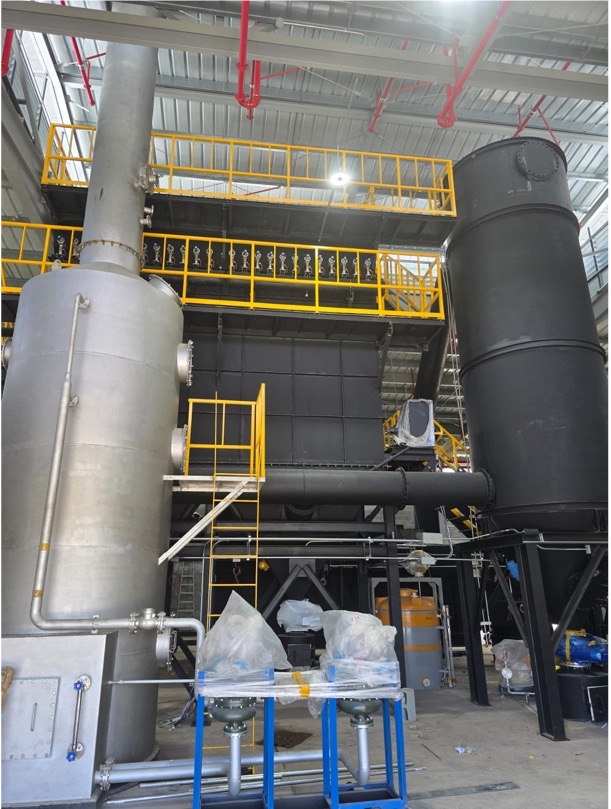
- Emission Control: To ensure zero environmental impact, the plant utilizes advanced filtration systems, including wet scrubbers and bag filters, which guarantee zero smoke and odor emissions while meeting strict air quality standards.
Results
- Global Standard Compliance: Constructed and operated strictly according to the rigorous standards of the International Civil Aviation Organization (ICAO/OACI).
- Significant Capacity Growth: Successfully increased processing capacity to 8.5 tons per day, with infrastructure designed to scale up to 20 tons per day by 2033.
- Zero-Emission Technology: Guaranteed an environmentally responsible process with zero smoke and odor, eliminating environmental pollutants.
- Automated Operations: The system supports 16 hours of continuous operation with a specialized team, significantly optimizing operational efficiency.
- High Energy Efficiency: Achieved a major technological leap by increasing the plant's calorific processing power from 1,500 to 4,500 kcal/kg, ensuring the effective destruction of high-risk international waste.